


Granite can darken when water enters microscopic openings and changes how light interacts with its surface. This is common around sinks and beneath wet glasses. A mark that fades after drying differs from a persistent stain.
At Granite Empire of Huntsville, we explain absorption before a homeowner commits to a slab. Customers researching marble kitchen countertops Winchester, TN also benefit from understanding this behavior, because natural marble and many quartzites can react to moisture differently from engineered quartz.
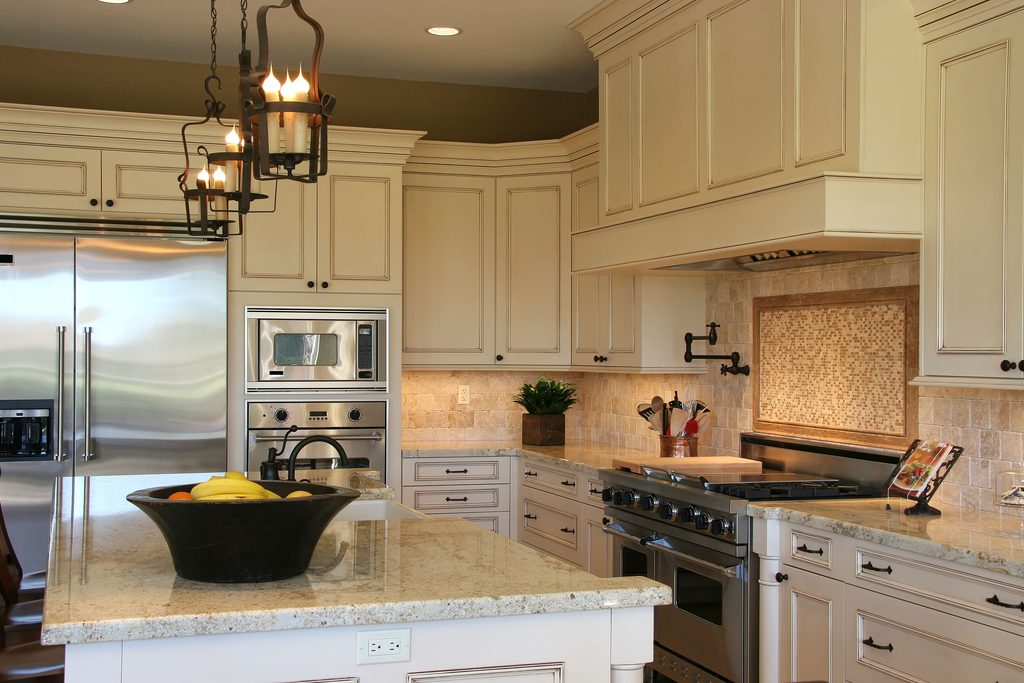
Why Does Water Make Granite Look Darker?
Water enters pores, grain boundaries, and natural openings, changing how the surface reflects light. Mineral colors can temporarily appear deeper.
Granite is dense, but absorption varies with minerals, finish, and factory treatments. One slab barely changes when wet; another shows obvious dark patches.
A dark ring under a wet glass that fades as it dries usually indicates moisture, not permanent damage. Check whether it disappears before using cleaners.
Is a Dark Water Spot the Same as a Stain?
A temporary water-darkened patch is not necessarily a stain. Moisture often evaporates and the original color returns, whereas oil, colored liquids, or certain treatments can leave marks that persist after the surface dries.
We check where the mark appeared and whether it fades. For marble kitchen countertops Winchester, TN, we also distinguish moisture from acid etching, which alters the finish.
| What You See | Likely Cause | What to Do First |
|---|---|---|
| Dark patch that gradually fades | Temporary absorbed moisture | Wipe dry and allow ventilation |
| Dark patch that stays after thorough drying | Possible oil, trapped moisture, or treatment issue | Ask a stone professional to identify it |
| Cloudy, dull area on marble | Possible acid etching | Avoid harsh cleaners; request finish assessment |
| Whitish crust near a wet joint | Possible mineral deposits | Check the moisture source and cleaning method |
At Granite Empire of Huntsville, we avoid calling every dark patch a stain. The wrong diagnosis can lead to unnecessary resealing or abrasive cleaning.
Why Does Granite Darken More Around the Sink?
Repeated splashes make the sink area a common place for darkening. Water collects near faucet holes, sink rims, backsplash joints, and drying mats.
A few droplets are usually harmless. A border that never dries, especially with wet cabinets or loose caulk, may signal a leak.
We inspect sink cutouts and joints as part of countertop installation because exposed edges and seams need correct detailing. For marble kitchen countertops Winchester, TN, keeping water from sitting against joints and cabinet materials is equally important.
Persistent leaks can swell plywood or birch cabinet components even when the stone remains intact.
Do All Granite Colors Absorb Water at the Same Rate?
No. Absorption varies by individual slab, mineral composition, finish, and processing, not simply by whether the granite looks white or black.
A lighter surface may make dark patches easier to see, but color alone does not determine porosity. We examine actual slabs and their treatments rather than relying on color.
Colonial White, Santa Cecilia, and Black Pearl have different mineral patterns. Even slabs sharing a name can behave differently; some receive factory resin treatments.
When homeowners shop for marble kitchen countertopsWinchester, TN, we also explain why marble deserves its own care plan. Marble is commonly more sensitive to acidic spills and surface etching than granite, regardless of how quickly either absorbs plain water.
Will Sealing Stop Granite From Turning Dark When Wet?
A suitable penetrating sealer can reduce water absorption, but it cannot guarantee that granite will never darken. Sealers are intended to slow liquid penetration and make cleanup easier, not turn natural stone into waterproof plastic.
The Natural Stone Institute notes that many granites do not need sealing. Repeatedly treating an already resistant surface may cause problems.
Natural-look impregnators preserve appearance; color enhancers deliberately deepen it. We choose according to the stone’s treatment.
At Granite Empire of Huntsville, we do not recommend a fixed annual sealing schedule for every granite. We first look for evidence that the stone actually absorbs liquid and consider manufacturer guidance.
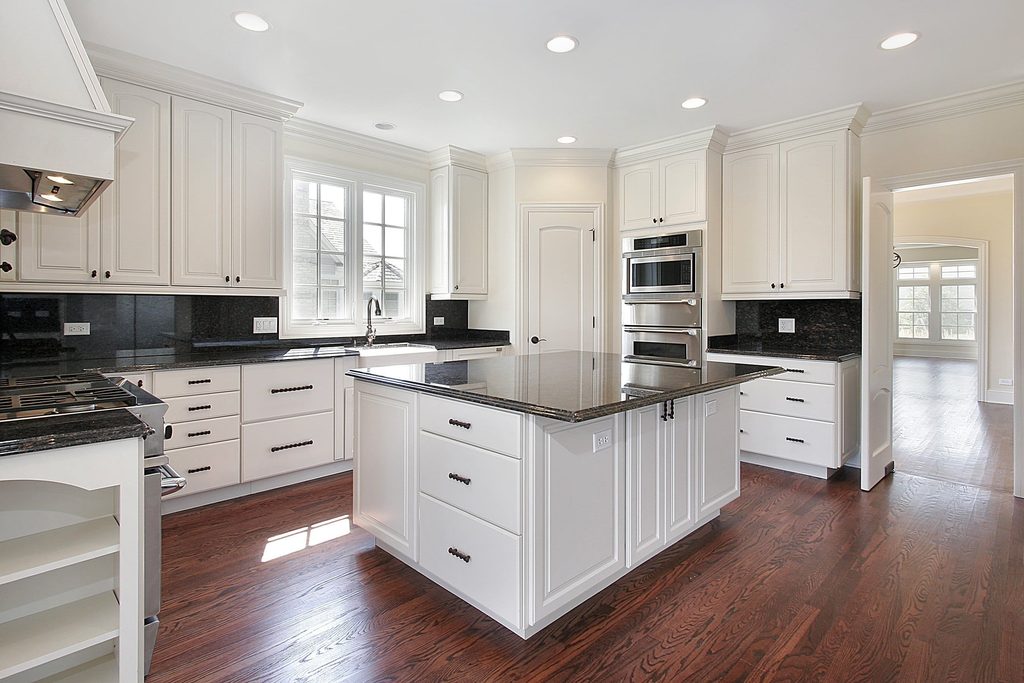
How Can You Test Whether Granite Needs Sealing?
A water-drop test on clean, dry stone can reveal absorption. It does not identify existing stains.
STONETECH’s published guidance suggests a water drop at least half an inch wide and a wait of about five minutes. If the area darkens, the stone may be absorbing water and could benefit from evaluation for additional protection.
We suggest this simple sequence:
- Clean a discreet area using a stone-safe, pH-neutral cleaner, then dry it completely.
- Place a small drop of plain water on the surface and observe it for about five minutes.
- Wipe the water away and check whether a darker patch remains.
- Allow the test area to dry fully, then discuss the result with a fabricator before applying sealer.
The surface must be dry before testing. For marble kitchen countertops Winchester, TN, remember that sealing does not prevent acid etching.
What Should You Do When Dark Spots Will Not Disappear?
Begin by removing the moisture source and allowing the surface to dry naturally. A damp patch can sometimes take many hours, or longer if moisture has entered at a joint, depending on the stone and ventilation.
Avoid heat guns, hair dryers, bleach, and acidic cleaners. They can damage finishes without solving the problem.
If the area stays dark, we recommend comparing photos in consistent lighting and inspecting plumbing, caulk, and wet items.
A professional may need to determine whether the problem is oil, trapped water, an old sealer, or another contaminant. Applying new sealer to wet stone can make diagnosis and drying more difficult.
How Does Granite Compare With Marble, Quartz, and Quartzite?
Granite, marble, quartzite, and engineered quartz handle spills differently, so the best material depends on cooking habits and expected maintenance. The useful comparison is not simply which looks best when dry.
| Material | Typical Water Behavior | Stain and Acid Considerations | Maintenance |
|---|---|---|---|
| Granite | Usually low absorption; varies by slab | Oil and colored spills can stain if absorbed | Wipe spills; assess sealing need |
| Marble | Absorption varies; some stones show dark wet patches | Acidic foods can etch the finish | pH-neutral cleaning and appropriate sealing |
| Quartzite | Often relatively dense; varies by slab | Some varieties may absorb liquids | Follow stone-specific sealing guidance |
| Engineered quartz | Nonporous manufactured surface | No routine sealing; avoid excessive heat | Mild cleaning and prompt spill removal |
Frequent citrus preparation may favor granite or quartz over marble because acidic spills can etch marble. Carrara remains an option with appropriate care.
At Granite Empire of Huntsville, we show full slabs rather than relying on a small color sample alone. For marble kitchen countertops Winchester, TN, we also discuss how veining, finish, and sink placement affect everyday upkeep.
How Much Do Different Stone Countertops Cost?
Stone prices depend on the exact slab, complexity of the kitchen, edge profile, and installation requirements. For planning, our published Alabama pricing gives these approximate material-only and installed ranges.
| Material | Slab Material per Sq Ft | Approximate Installed Price per Sq Ft |
|---|---|---|
| Entry-level granite | $40–$60 | $75–$110 |
| Mid-range granite | $60–$100 | $95–$150 |
| Engineered quartz | $50–$140 | $85–$180 |
| Carrara marble | $55–$80 | $75–$120 |
| Calacatta marble | $90–$160 | $130–$250 |
| Quartzite | $75–$130 | $110–$180 |
For mid-range granite, published slab prices are around $50–$90 per square foot, with separately quoted installation starting around $35. Check whether fabrication and cutouts are included.
For 40 square feet, estimated installed totals are around $3,000–$4,400 for entry granite or $3,000–$4,800 for Carrara marble, before unusual extras.
For marble kitchen countertops Winchester, TN, we recommend budgeting for the finished installation and realistic care requirements rather than relying only on the slab price. We provide project-specific quotes after reviewing dimensions and the selected material.
How Long Does Countertop Fabrication and Installation Take?
For in-stock material and ready cabinets, our typical timeline is 5–7 business days from completed laser templating to installation. The full process from first selection to finished countertops often takes around 10–14 business days, provided the project does not require special orders or cabinet repairs.
At Granite Empire of Huntsville, we handle templating, cutting, edge finishing, and installation. A standard installation often takes one day.
Before templating, cabinets must be stable and level to prevent stress around seams and cutouts.
We serve Winchester, TN from our Huntsville, AL showroom and fabrication facility; we do not have an office or showroom in Winchester. We coordinate on-site measurements and installation for customers there.
FAQ
Does Darkening Mean My Granite Is Damaged?
Usually not. When a dark patch fades as water evaporates, it is typically temporary absorption rather than permanent damage.
How Long Does Wet Granite Take to Return to Its Original Color?
It varies with the stone, the amount of water absorbed, and ventilation. A small surface mark may fade relatively quickly, while moisture trapped near a joint can take much longer.
Does Every Granite Countertop Need Sealing?
No. Some dense or resin-treated granites do not require sealing, while others benefit from a compatible penetrating product. We recommend assessing the specific slab first.
Can Water Permanently Stain Granite?
Plain water often dries without leaving a permanent mark. Persistent discoloration may be caused by minerals, contaminants, trapped moisture, or surface treatments and should be assessed.
Can Marble Darken When It Gets Wet Too?
Yes. Many marble varieties absorb some water and may temporarily darken. Marble also needs separate precautions against acidic etching.
Will Vinegar Remove a Dark Spot on Natural Stone?
No. Vinegar can etch marble and other acid-sensitive stones, and it may affect some surface treatments. Use a stone-safe product and identify the mark first.
Understanding how stone reacts to water helps prevent unnecessary worry and inappropriate cleaning. At Granite Empire of Huntsville, we help homeowners compare granite, marble, quartz, and quartzite, review full slabs, and plan professional templating, fabrication, and installation. We serve customers interested in marble kitchen countertops Winchester, TN from our Huntsville location, not from a Winchester branch. Visit our showroom at 11104 Memorial Pkwy SW, Huntsville, AL 35803, or call 256-832-9888 to discuss material choices, moisture resistance, and the best care plan for your kitchen.