


We get asked constantly how quartz actually differs from granite, marble, and other engineered surfaces, especially since showroom samples can look deceptively similar at a glance. The differences go well beyond appearance and matter a lot once a homeowner is living with the material daily. As a company that fabricates and installs quartz countertops in Moulton, AL and throughout the Huntsville area, here’s a clear breakdown of what actually sets quartz apart.

Is Quartz a Natural Stone or a Manufactured Material?
Quartz is a manufactured material, not a natural stone, made from roughly 90-95% ground quartz crystals combined with resins and pigments. This is the fundamental difference that separates it from granite and marble, which are both cut directly from natural stone quarries.
Because it’s engineered, quartz offers a level of pattern and color consistency that natural stone simply can’t replicate slab to slab. Quartz countertops in Moulton, AL clients often choose this material specifically for that predictability, since what they see in the showroom closely matches what arrives in their kitchen.
How Does Quartz’s Manufacturing Process Affect Its Durability?
Quartz’s manufacturing process makes it highly resistant to scratching and staining, but the resin content introduces vulnerabilities that natural stone doesn’t have, particularly around heat exposure. This tradeoff is central to understanding how quartz differs from granite and marble.
The resin binders that hold quartz together can discolor or crack under prolonged direct heat, something granite handles without issue due to its purely mineral composition. This is one of the most important distinctions we explain to anyone comparing quartz countertops in Moulton, AL against natural stone options.
Does Quartz Require the Same Maintenance as Granite or Marble?
No, quartz requires significantly less maintenance than granite or marble since it never needs sealing. Its non-porous surface resists staining and bacteria without the annual upkeep natural stone requires.
Granite needs sealing about once a year, and marble often needs it more frequently, while quartz skips this step entirely due to its engineered, non-porous structure. Quartz countertops in Moulton, AL homeowners appreciate this reduced maintenance commitment compared to natural stone alternatives.
Granite vs. Quartz vs. Marble: What Are the Core Differences?
Granite offers natural variation and superior heat resistance, quartz offers manufactured consistency and low maintenance, and marble offers unmatched appearance but requires the most careful handling. Here’s how the three compare directly.
| Factor | Quartz | Granite | Marble |
|---|---|---|---|
| Material origin | Manufactured, engineered | Natural stone, quarried | Natural stone, quarried |
| Maintenance | Low, no sealing required | Sealed annually, easy cleaning | Higher, needs frequent sealing |
| Heat resistance | Good, can discolor under prolonged heat | Excellent, handles hot pans directly | Good, but can stain from acidic heat |
| Price (slab + install) | $60-$110 per sq ft installed | $50-$90 per sq ft installed | $75-$130 per sq ft installed |
This comparison highlights why the right material really depends on priorities like maintenance tolerance, heat exposure, and whether natural variation matters to the homeowner.
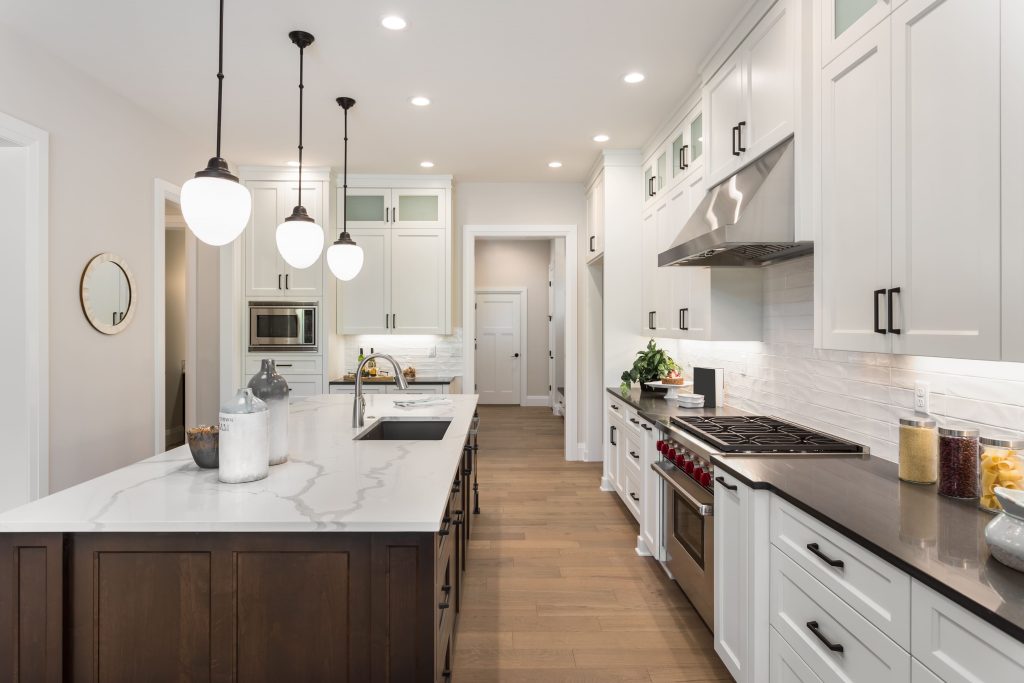
Does Quartz Look Different From Granite Up Close?
Yes, quartz typically has a more uniform, repeating pattern compared to granite’s natural, random variation. This is one of the easiest ways to visually distinguish the two materials once you know what to look for.
Granite’s mineral deposits create unpredictable movement and color shifts across a single slab, while quartz’s engineered process results in a more consistent, often repeating design. Homeowners choosing between quartz countertops in Moulton, AL and granite should view both in person, since photos don’t always capture this distinction clearly.
Are All Quartz Brands the Same Quality?
No, quartz brands vary significantly in quality, resin consistency, and color accuracy. Not all quartz is manufactured to the same standard, even though it’s often marketed as a single uniform category.
Established collections like Cambria and Silestone tend to offer more consistent quality control than lower-tier or off-brand quartz products. We recommend asking specifically about brand and collection when comparing quotes for quartz countertops in Moulton, AL, rather than assuming all quartz performs identically.
How Does Quartz Compare to Porcelain Countertops?
Quartz offers better impact resistance than porcelain, while porcelain offers superior heat and UV resistance, making each material better suited to different applications. Porcelain is a newer entrant to the countertop market and differs from quartz in its manufacturing process and composition.
Porcelain is fired at extremely high temperatures and contains no resin, which is why it handles heat and sun exposure better than quartz. For most indoor kitchens, quartz countertops in Moulton, AL remain the more practical and widely available choice compared to porcelain, though porcelain is worth considering for outdoor applications.
What Does Quartz Cost Compared to These Alternatives?
Quartz typically costs $60-$110 per sq ft slab, with installation fees from $35 per sq ft, putting a standard kitchen project between $3,000 and $6,500 total. This sits above granite’s typical range but below marble’s higher pricing tier.
We provide a full written quote so homeowners can compare quartz countertops in Moulton, AL against granite and marble pricing directly, rather than guessing at cost differences between materials.
How Long Does Quartz Installation Take?
Most quartz installations are completed in 5-7 business days from template to install, similar to granite timelines. Since quartz is manufactured rather than quarried, availability tends to be more consistent, which helps keep timelines predictable.
The process includes an initial consultation, precision templating, fabrication with cutouts and edge profiling, and final installation, usually completed in a single day. Quartz countertops in Moulton, AL projects generally move through this process smoothly, and we travel from our Huntsville showroom to handle templating and installation on-site.
FAQ
Is quartz natural stone or man-made?
Quartz is man-made, composed of roughly 90-95% ground quartz crystals combined with resins and pigments, unlike granite and marble which are cut from natural stone.
Does quartz need to be sealed like granite?
No, quartz never needs sealing due to its non-porous, engineered surface, unlike granite which requires annual resealing.
How much does a quartz countertop cost?
Most kitchens run $3,000 to $6,500 total, based on $60-$110 per sq ft slab plus installation fees from $35 per sq ft.
Does Granite Empire of Huntsville have an office in Moulton, AL?
No, our only showroom is in Huntsville, and we travel out for templating and installation to serve the surrounding area, including Moulton, AL.
Can quartz handle hot pans like granite can?
No, quartz can discolor or crack under prolonged direct heat exposure due to its resin content, while granite handles this without issue.
How long does quartz installation take?
Typically 5-7 business days from template to install, similar to granite installation timelines.
Are all quartz brands equal in quality?
No, established collections like Cambria and Silestone offer more consistent quality than lower-tier or off-brand quartz products.
If you’re comparing quartz against granite, marble, or porcelain for an upcoming project, Granite Empire of Huntsville can walk through material differences, pricing, and realistic timelines during a showroom consultation. We’re located at 11104 Memorial Pkwy SW, Huntsville, AL 35803, and can be reached at 256-832-9888 to schedule a visit or ask about current stone availability.