


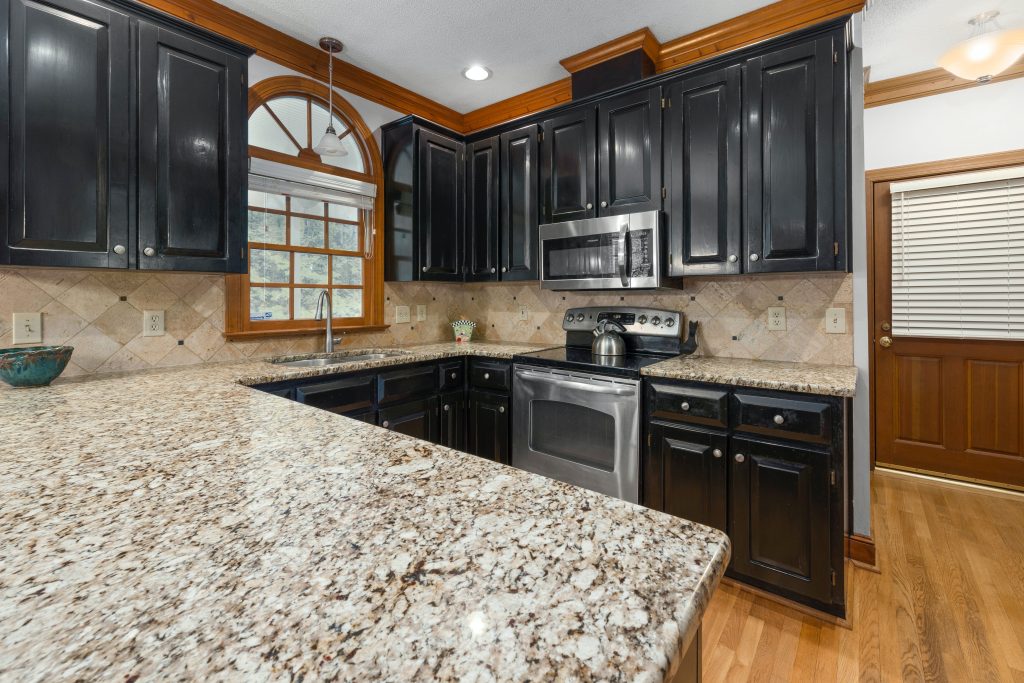
Granite has earned its reputation as one of the toughest and most reliable countertop materials in American homes. It resists scratches, heat, and everyday wear in ways few other materials can. But over the years working with homeowners choosing granite kitchen countertops in Lawrenceburg, TN, we’ve seen that even this incredibly durable stone can be damaged if it’s not treated properly.
At Granite Empire of Huntsville, we fabricate and install granite every day, giving us firsthand insight into what keeps granite looking flawless for decades — and what can ruin it faster than people expect. Granite does not “wear out,” but bad habits, the wrong products, or simple misunderstandings can cause chips, stains, dull spots, or weakened areas over time.
This article explains the biggest threats to granite countertops and how to avoid them. Understanding this helps you protect your investment and keep your kitchen surfaces looking exceptional long-term.

Extreme Heat and Sudden Temperature Shock
Granite is heat-resistant — but not heat-proof. Placing a hot pan directly on the countertop once might not show damage immediately, but repeated exposure or extreme temperature shock can create stress fractures or dark spots beneath the stone’s surface.
Thermal shock is one of the most common causes of cracks we see when maintaining granite kitchen countertops in Lawrenceburg, TN. This happens when a cold stone suddenly meets a scorching-hot pan. The rapid expansion can damage even the toughest slab.
We always recommend trivets or heat pads. They cost a few dollars and protect a countertop worth thousands.
Harsh Chemicals and Acidic Cleaners
Despite being a natural stone formed under intense pressure, granite does not get along well with certain chemicals. Acidic or high-pH cleaners can degrade the sealer and dull the polish over time.
The biggest offenders include:
- bleach
- oven cleaners
- ammonia
- vinegar
- lemon or citrus cleaners
- abrasive powders
- degreasers
Using these regularly will wear down the protective layer, making the granite more absorbent and more vulnerable to stains and etching.
When homeowners ask us at Granite Empire of Huntsville how to clean their granite kitchen countertops in Lawrenceburg, TN properly, we always recommend simple stone-safe cleaners or mild dish soap and warm water.
Skipping Regular Sealing
Granite needs sealing to block moisture, oils, and pigments from entering the stone. Sealing isn’t complicated, but ignoring it is one of the fastest ways granite becomes stained.
A granite slab with worn-down sealer can absorb:
- cooking oil
- wine
- coffee
- sauces
- grease
- makeup (in bathroom spaces)
Once absorbed, stains become difficult to remove without a poultice.
We seal every slab before installation, but homeowners must reseal granite periodically. How often depends on stone type and kitchen usage, but once a year is a good rule for most households we serve in Lawrenceburg, TN.
A quick water-drop test tells you if resealing is needed: If water darkens the stone within a minute, it’s time.
Impact Damage and Dropping Heavy Objects
Granite is extremely strong, but like all stone, it can chip if struck hard enough. Edges — especially around sinks or dishwashers — are the most vulnerable. These areas can chip when:
- cast-iron cookware hits the edge
- heavy bottles fall
- tools or construction debris hit the stone
- appliances bump the edge during installation
We’ve repaired many chipped granite kitchen countertops in Lawrenceburg, TN, and the cause is often the same: impact near an edge.
The good news? Most chips can be repaired and blended into the stone, especially when handled quickly. But taking care around heavy cookware prevents most damage.
Using Your Countertop as a Cutting Board
Granite is harder than most steel knives. That means two things:
- Your knife will dull extremely fast.
- You could scratch the granite’s finish over time, especially polished surfaces.
Small grit, sand, or tiny minerals trapped under the knife can also create micro-scratches. These aren’t easy to see at first but accumulate into dullness.
Homeowners choosing granite kitchen countertops in Lawrenceburg, TN often assume granite is indestructible. While it can tolerate slicing occasionally in emergencies, daily chopping directly on the stone is not a good long-term habit.
Standing or Sitting on the Countertops
It may seem harmless, but granite countertops are not designed to support human weight — especially on overhangs or near sink cutouts. These areas have less support underneath and can crack under pressure.
We’ve seen cracks occur when someone:
- climbs onto the countertop to reach a high shelf
- sits on the edge during a conversation
- stands on the counter to change a lightbulb
Even though granite is incredibly strong, it isn’t flexible. Localized pressure can lead to fractures, particularly around weak points.
Improper Installation
One of the most serious threats to granite isn’t the homeowner — it’s the installer. A poorly installed countertop can fail early, no matter how carefully you treat it. Problems that come from bad installation include:
- uneven support
- poorly glued seams
- weak sink reinforcement
- improper leveling
- inadequate adhesive
- cabinet inconsistencies
At Granite Empire of Huntsville, we correct many installations originally done by inexperienced crews in the Lawrenceburg area. When installation is done right, granite lasts decades. When it’s done wrong, problems appear within months.
Allowing Stains to Sit Too Long
Granite resists most stains, but only if spills are cleaned promptly. Oil, wine, and deeply pigmented liquids can seep into the stone if left too long.
Common stain culprits include:
- red wine
- coffee
- tea
- tomato sauce
- turmeric
- soy sauce
- beauty products
If you cook frequently, especially with oil, wiping spills right away helps keep granite kitchen countertops in Lawrenceburg, TN looking new.
Using Abrasive Pads or Steel Wool
Some homeowners assume more scrubbing equals cleaner granite — but abrasive pads can scratch the finish and dull the polish.
Steel wool, rough scrubbers, and scouring powders all damage the surface. Even if scratches aren’t immediately visible, they slowly degrade the finish and make the stone harder to clean.
Instead, use:
- soft cloths
- microfiber towels
- non-abrasive sponges
This protects both the granite and its sealer.
Ignoring Structural Issues in the Home
Granite is strong — but cabinets, floors, and walls can shift over time. Houses naturally expand, settle, and move. When cabinets become uneven or when support weakens, countertops can crack.
Signs to watch for:
- slight cabinet separation
- sagging floors
- excessive humidity
- water damage inside base cabinets
During many service visits in Lawrenceburg, we identify home support issues as the root cause rather than the stone itself. Granite relies on cabinet stability to remain safe.
Poor Sink Support and Moisture Exposure
Undermount sinks are beautiful, but if they’re not properly reinforced, water exposure can weaken the adhesive. Over time, this can create stress in the granite around the sink cutout.
We’ve seen sink rims fail when:
- plumbing leaks
- moisture accumulates
- support brackets weren’t installed
- silicone was not applied correctly
This is why proper installation — and occasional inspection — is so important.

Granite is one of the strongest, longest-lasting materials you can choose for your kitchen. But like all natural materials, it needs proper care, good installation, and simple daily habits to stay beautiful.
For homeowners choosing granite kitchen countertops in Lawrenceburg, TN, knowing what can damage granite helps ensure your investment lasts decades without fading or cracking.
At Granite Empire of Huntsville, we proudly serve Lawrenceburg, TN, bringing expert fabrication and installation from our Huntsville, AL facility. With the right care, granite delivers unbeatable performance — and we’re here to help you keep it looking perfect.