

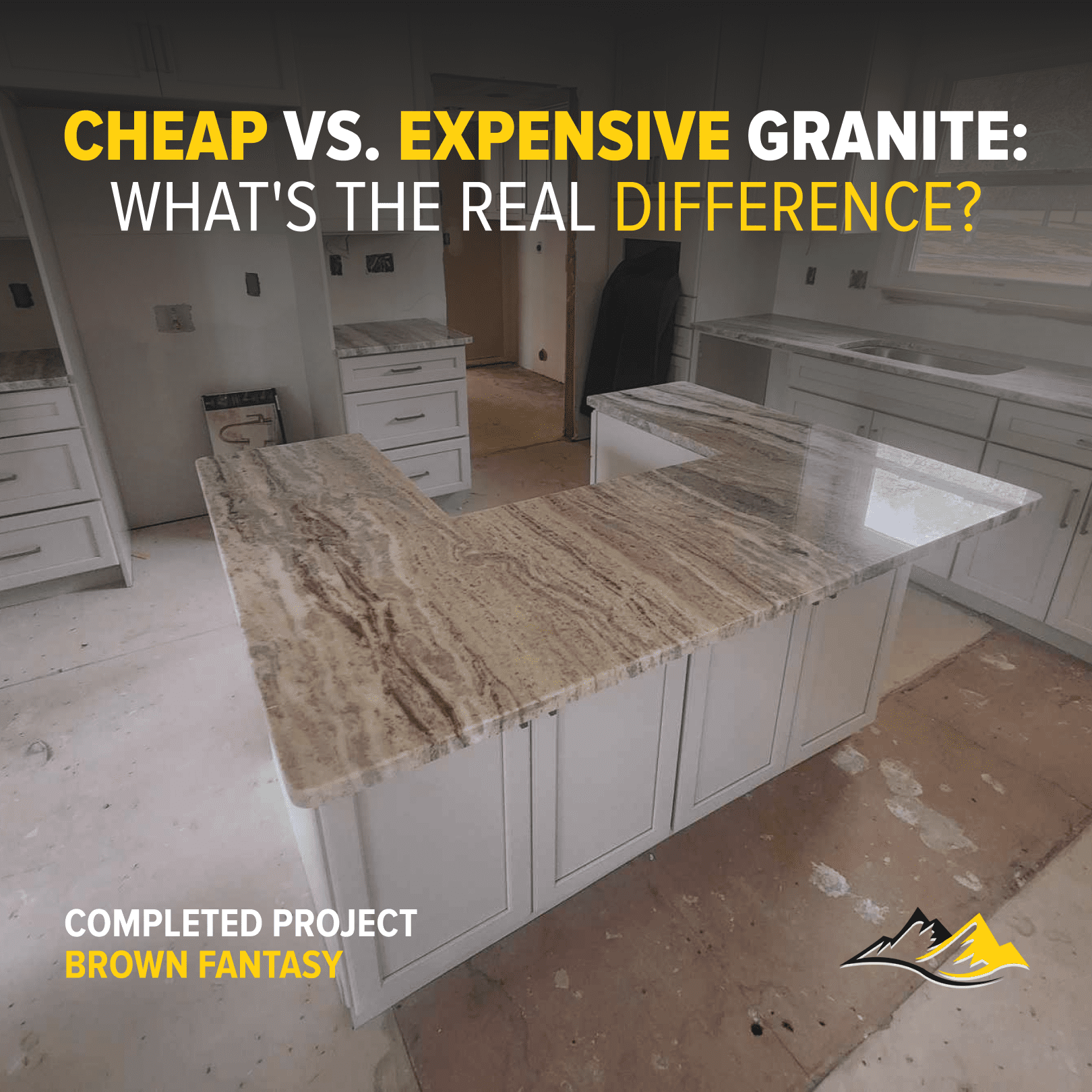
Granite countertops are among the most desirable features in kitchens and bathrooms due to their natural beauty, durability, and timeless appeal. If you’re shopping for granite countertops in Athens, AL, you may notice a wide range of prices for seemingly similar products. So, what is the difference between expensive and cheap granite? Understanding the factors that influence the cost of granite can help you make informed decisions when upgrading your home.
At Granite Empire of Huntsville, we serve the residents of Athens, AL, by offering high-quality granite options at a range of price points. In this article, we’ll explain what makes some granite countertops more expensive than others, helping you understand how to choose the best option for your needs and budget.
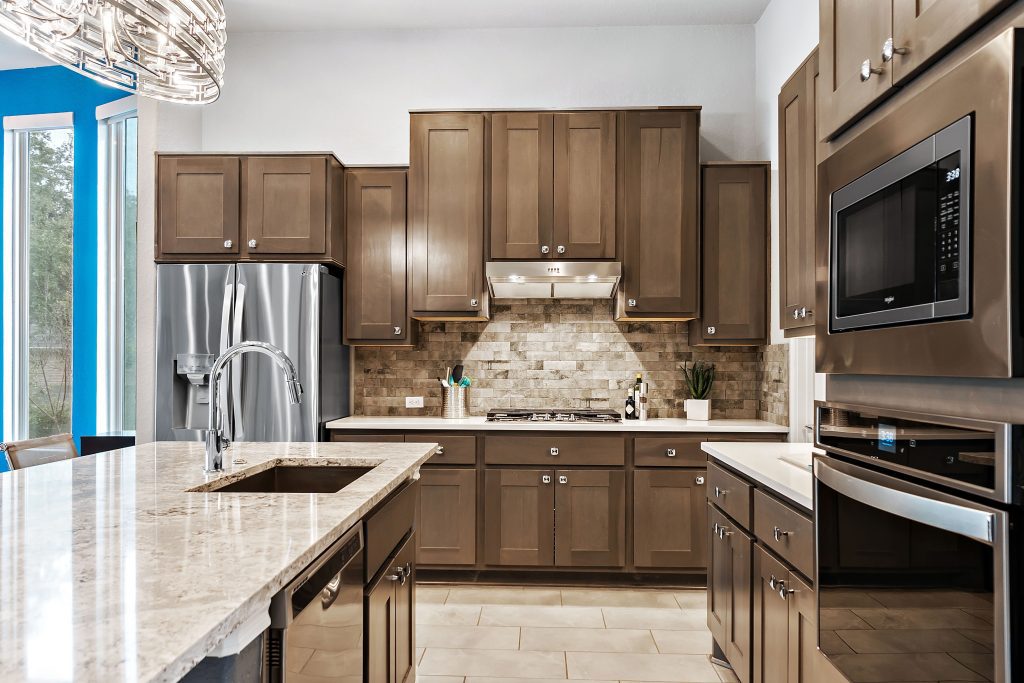
What Factors Affect the Cost of Granite?
Granite prices vary significantly based on several factors, including the type of granite, its rarity, quality, color, thickness, and even the complexity of installation. Let’s break down the main differences between expensive and cheap granite countertops in Athens, AL.
1. Rarity and Availability of the Granite
One of the most significant factors affecting the price of granite is the rarity of the stone. Granite is a natural material, quarried from various locations around the world, and its availability depends on where it’s mined.
Rare and Exotic Granite
Expensive granite typically comes from quarries that produce unique and rare stones. These types of granite often feature intricate patterns, bold veining, and colors that are harder to find. For example, granite with vibrant hues like blue, red, or green tends to be more expensive because it is less common. Quarries in countries like Brazil, Italy, and India often produce these exotic stones, which are harder to access and transport.
Common Granite
Cheaper granite, on the other hand, is more widely available. It comes from quarries that produce large quantities of granite with more common colors, such as black, white, or beige. These colors are easier to find and quarry, making them more affordable. As a result, standard granite varieties tend to have simpler patterns and consistent colors.
2. Color and Pattern
The color and pattern of the granite slab also play a major role in determining its price. Granite comes in a wide range of colors, from light neutrals to deep, bold hues, and the rarity of a particular color can affect its cost.
Unique Colors and Bold Patterns
Expensive granite slabs often have rare colors or dramatic veining that make them stand out as a focal point in your kitchen or bathroom. Granite with more complex patterns, such as large veining or swirling, is typically more expensive because it is harder to find and is in high demand.
For instance, exotic granites like Blue Bahia, which features stunning blue tones, or White Macaubas with its striking linear veining, are examples of high-end granite that commands a premium price.
Simpler Colors and Uniform Patterns
In contrast, cheaper granite tends to have more uniform patterns and simpler colors, such as black or gray, which are more commonly available. Granite with minimal veining or speckling, like Absolute Black or Baltic Brown, is often more affordable because it is more common and less labor-intensive to extract.
3. Quality and Grade of Granite
Granite is also classified into different grades, which reflect the stone’s quality, durability, and aesthetic appeal. Higher-grade granite typically costs more, while lower-grade granite is more affordable.
High-Grade Granite
High-grade granite, often referred to as premium or exotic granite, is characterized by its rare colors, intricate patterns, and lack of imperfections. These slabs are generally thicker and have fewer natural flaws like pits or fissures. High-grade granite also has a higher polish, giving it a luxurious, glossy finish.
Because of its quality and beauty, high-grade granite is more expensive, but it’s also more durable and resistant to wear and tear.
Low-Grade Granite
Lower-grade granite, also called commercial or builder-grade granite, tends to have more visible imperfections, such as veining inconsistencies or small cracks. While these flaws may not affect the stone’s durability, they do reduce its visual appeal, which is why it’s priced lower.
Lower-grade granite is often thinner (2 cm) compared to higher-end granite (3 cm), making it less sturdy. However, with proper installation and support, it can still be a good option for homeowners on a budget.
4. Thickness of the Granite Slab
The thickness of the granite slab is another factor that affects its cost. Granite typically comes in two thicknesses: 2 centimeters (3/4 inch) and 3 centimeters (1-1/4 inch). Thicker slabs are generally more expensive because they offer better durability and structural integrity.
Thicker Slabs
Thicker granite slabs (3 cm) are more durable and provide a more substantial look. They’re less likely to crack or chip and don’t require additional support, making them ideal for high-traffic areas like kitchen countertops. Because thicker slabs use more material, they tend to be more expensive.
Thinner Slabs
Thinner slabs (2 cm) are often more affordable but require additional reinforcement during installation, such as plywood backing, to ensure they don’t crack. Thinner granite can still be a good option for bathroom countertops in Athens, AL, where durability may be less of a concern compared to a kitchen.
5. Origin of the Granite
The origin of the granite slab also plays a role in its cost. Granite is quarried from countries around the world, and the location of the quarry affects the price due to transportation and production costs.
Imported Granite
Granite that is quarried in distant locations, such as Brazil or India, is more expensive because of the shipping and logistics involved in bringing the stone to the United States. Additionally, some regions produce more exclusive and exotic stones, which drives up the cost even further.
Domestic Granite
Granite sourced from more local quarries tends to be less expensive due to lower transportation costs. While the selection may not include as many exotic options, local granite is still durable and beautiful. For homeowners looking for affordable granite countertops in Athens, AL, local stone can be a cost-effective option without sacrificing quality.
6. Installation and Labor Costs
The cost of granite countertops isn’t just about the price of the slab; installation and labor costs are also major considerations. More expensive granite often requires more labor-intensive installation, which can drive up the overall price of the project.
Custom Fabrication
If you choose an expensive, exotic granite with intricate patterns, the fabrication process will be more complex. Custom edges, unique cutouts for sinks or appliances, and careful seam placement all require skilled labor, which increases the installation cost.
Simpler Installation
Cheaper granite slabs with uniform patterns are easier to fabricate and install, which lowers labor costs. If you’re opting for a more straightforward design, you can save on both material and installation expenses.
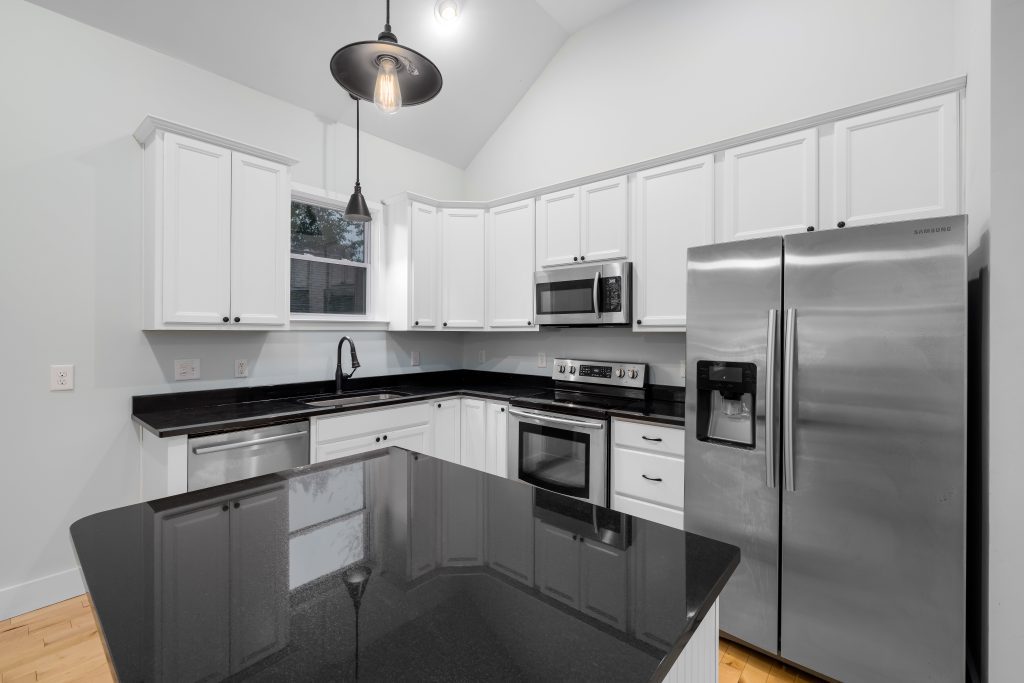
Why the Price Difference Matters
When comparing expensive and cheap granite countertops in Athens, AL, it’s important to consider your priorities. Are you looking for a rare and luxurious statement piece that will be the focal point of your kitchen? Or are you simply looking for a durable, beautiful countertop that fits within your budget?
Long-Term Investment
More expensive granite, with its higher quality and unique aesthetic, can be considered a long-term investment. These countertops are often more durable, resistant to damage, and visually striking, making them a great choice for homeowners who plan to stay in their homes for many years.
Budget-Friendly Options
On the other hand, cheaper granite can still provide a beautiful, durable surface without breaking the bank. It’s an excellent option for those on a budget or for homeowners looking to upgrade a rental property or secondary home.

Why Choose Granite Empire of Huntsville?
At Granite Empire of Huntsville, we serve customers in Athens, AL, by offering a wide range of granite countertop options to suit any budget. Whether you’re looking for an affordable granite solution or a high-end exotic slab, we can help you find the perfect countertop for your home.
Expertise and Quality
We pride ourselves on offering top-quality granite at competitive prices. Our team of skilled craftsmen ensures that every slab is fabricated and installed with precision, giving you a beautiful, durable countertop that will last for years.
Extensive Selection
Our showroom features a diverse selection of granite slabs, ranging from affordable options to premium, exotic stones. No matter your style or budget, Granite Empire of Huntsville has the right granite countertops for your Athens, AL home.
Local Service
Though we are based in Huntsville, Granite Empire proudly serves the residents of Athens, AL, providing personalized service and expert installation for all your granite countertop needs.
Conclusion
The difference between expensive and cheap granite comes down to factors like rarity, quality, thickness, and installation complexity. Whether you’re looking for high-end, exotic granite or a more budget-friendly option, Granite Empire of Huntsville offers a wide range of granite countertops in Athens, AL, to suit your needs. Contact us today to explore our selection and find the perfect granite for your home.