


Countertops are an essential part of nearly every kitchen, bathroom, or commercial space. They serve as the foundation for preparing meals, organizing spaces, and, of course, adding aesthetic appeal. But have you ever wondered where countertops came from, or who first had the idea to use natural stones for this purpose? At Granite Empire of Huntsville, we have a passion for stone surfaces and know how important it is to understand the history behind them.
The use of stone countertops dates back thousands of years, and the process of turning raw stone into functional and attractive surfaces has evolved over time. Let’s explore the origins of countertops, how natural stone was first used, and how the industry continues to evolve today—especially when it comes to countertops in Guntersville, AL.

The Ancient Origins of Countertops
Countertops, as we know them today, didn’t always exist. In ancient times, people needed functional surfaces to perform daily tasks like food preparation, crafting tools, and organizing their living spaces. Early countertops were likely simple flat surfaces made from natural materials such as wood, clay, and even stone.
One of the first documented uses of stone surfaces in a domestic setting comes from ancient civilizations such as Egypt, Mesopotamia, and the Indus Valley. These civilizations often used stone or clay to create sturdy work surfaces. For example, the Egyptians were known for using stone slabs in kitchens and for preparing food, and these surfaces were often found in the tombs of the elite. These early countertops were often made from hard stones like limestone or granite.
It is believed that granite, with its durability and aesthetic appeal, was one of the first natural stones used for countertops. However, as time progressed, the materials used for countertops evolved, and many different types of stone began to be used.
The Role of Ancient Rome in Advancing Countertop Technology
As the Roman Empire expanded, so did the use of stone in architecture and construction. The Romans were known for their advanced engineering skills, and their use of stone in buildings, roads, and other structures set the stage for future countertop development.
Roman homes, known as villas, often featured kitchen spaces with large stone countertops made of marble, limestone, and other durable stones. The use of marble countertops in the Roman era was particularly significant. Roman architects and craftsmen used marble in both public buildings and private homes due to its luxurious appearance, resistance to wear, and ability to withstand heat. This period laid the foundation for the widespread use of natural stones like marble and granite in countertops.
The Middle Ages and the Rise of Natural Stone Countertops
While countertop usage slowed during the Middle Ages in Europe, natural stones continued to be utilized in other areas. The rise of castles, churches, and other large stone buildings saw an increase in the use of stone surfaces for structural purposes. The use of stone slabs for countertops would return as kitchens began to develop in the 16th century.
By this time, stone had become synonymous with durability, cleanliness, and luxury. However, many of the countertops used during this time were rudimentary compared to the polished slabs we see today. It wasn’t until the 17th century that advancements in stone cutting and finishing techniques began to make their way into residential kitchens.
The Industrial Revolution and the Evolution of Countertops
With the advent of the Industrial Revolution in the late 18th and early 19th centuries, countertop technology saw significant advancements. Stone quarries were able to supply more stone than ever before, and cutting techniques improved to allow for larger, more uniform slabs. This increased accessibility made it possible for countertops to be made from a variety of natural stones, including granite, marble, and limestone.
During the 19th century, the idea of having dedicated countertop surfaces in kitchens became more popular. The industrialization of stone cutting allowed stone surfaces to be used in more homes and commercial establishments, particularly with the rise of the middle class. Kitchens became more refined and included stone countertops that were both functional and decorative.
At this time, marble countertops were particularly sought after. Marble’s fine, elegant appearance and its resistance to heat made it a popular choice for countertops in kitchens and bakeries.

Granite and the Birth of Modern Countertops
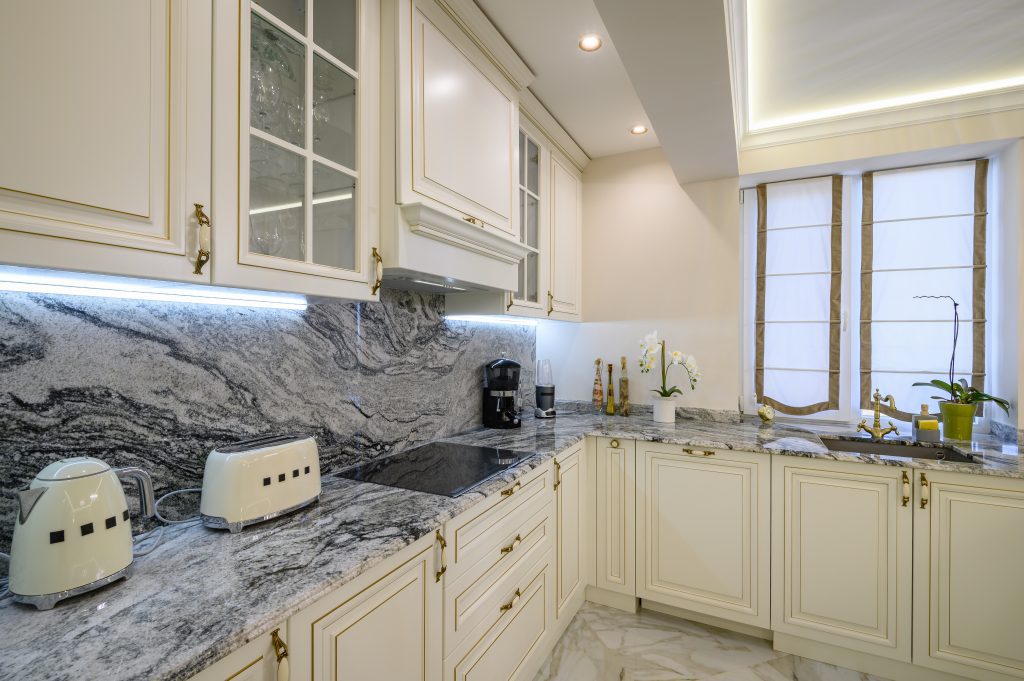
By the late 20th century, granite had emerged as the top choice for high-end countertops. Its durability, resistance to stains, and timeless beauty made it an ideal material for both residential and commercial spaces.
Granite became widely used in the 1970s and 1980s, thanks to advancements in quarrying and cutting technology. The ability to produce large, polished granite slabs made it more accessible to homeowners. This was a game-changer for countertops in Guntersville, AL, and beyond, as granite countertops became synonymous with luxury.
The process of cutting and polishing granite became more refined, and by the 1990s, granite was firmly established as one of the most popular materials for countertops worldwide. At Granite Empire of Huntsville, we understand the importance of choosing the right material for your space, which is why we offer a wide selection of granite options for homeowners in Guntersville, AL. Today, granite remains a top choice for both its durability and aesthetic appeal.
The 21st Century and Beyond: The Rise of Engineered Stone
While natural stone countertops remain a popular choice, there’s no denying that engineered stones like quartz have become more common in recent years. Quartz is a man-made material that mimics the appearance of natural stones like granite and marble, while offering additional benefits like enhanced durability and easier maintenance.
However, for many homeowners, nothing beats the beauty and authenticity of natural stone. At Granite Empire of Huntsville, we continue to specialize in high-quality granite, marble, and other natural stone countertops for customers in Guntersville, AL. We believe that natural stone brings timeless elegance to any space.
Conclusion
The history of countertops is long and fascinating, with natural stone playing a crucial role in their evolution. From the earliest civilizations using basic stone surfaces to the modern luxury of granite countertops, natural stones have proven to be the material of choice for creating durable, beautiful surfaces in homes and businesses alike.
At Granite Empire of Huntsville, we are proud to continue the tradition of using natural stone in countertops for customers in Guntersville, AL. Whether you’re looking for a classic granite countertop or a more modern engineered stone, we have the expertise and selection to meet your needs. Our commitment to quality craftsmanship ensures that your countertops will not only look stunning but also stand the test of time.